On September 5, Tsinghua University PBC School of Finance (Tsinghua PBCSF) successfully held its 2026 Alumni Anniversary Reunion Day. More than 150 alumni from the 1986 master’s cohort, the 1996 doctoral and master’s cohorts, the 2006 master’s cohort, and the 2016 doctoral and master’s cohorts returned to their alma mater to reconnect with former classmates and faculty members and discuss the School’s development. Representatives of the incoming Class of 2026 also attended the event.
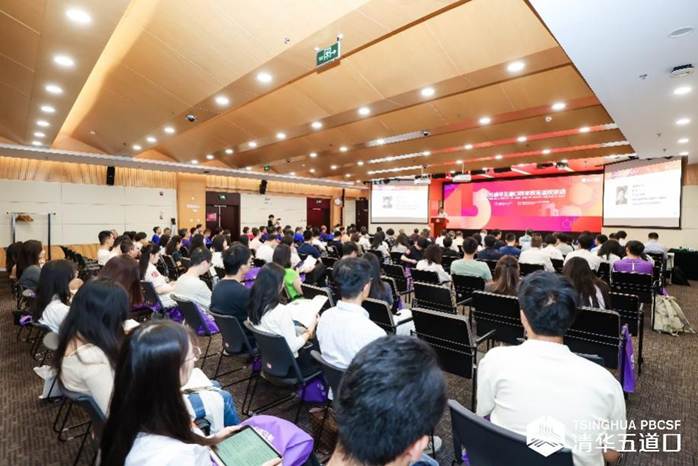
Photo: The reunion
Zhang Wei, Assistant Dean of Tsinghua PBCSF, and Vice President of the Tsinghua PBCSF Alumni Association, delivered welcoming remarks and provided an update on the School’s development. Li Jingfang, Director of the Alumni Affairs Office and Academic Affairs Office, and Secretary-General of the Tsinghua PBCSF Alumni Association, moderated the event. Faculty members and guests included Qin Wanshun and Jin Yunhui, professors at Peking University’s Guanghua School of Management who have taught at the School for more than three decades; Kang Yitong, a member of the 1984 master’s cohort, former Deputy Director of the Graduate School of the People’s Bank of China, and former Vice Dean of the School; Zhou Gengqiang, a member of the 1998 doctoral cohort, former class advisor to the 1996 master’s cohort, and Secretary-General of the China Financing Guarantee Association; and Liu Guoyao, Executive Deputy Director of the Student Health and Development Research Center at the School and class advisor to the 2016 cohort.
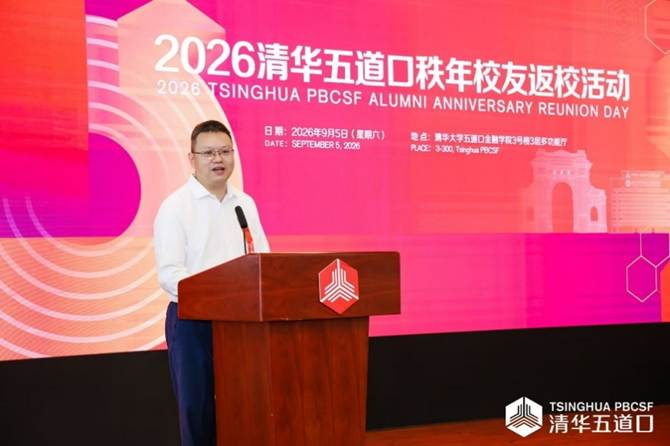
Photo: Zhang Wei delivers welcoming remarks and provides an update on the School’s development
On behalf of the School, Zhang extended a warm welcome to the returning alumni and expressed sincere gratitude to those who have long supported PBCSF’s development. He also paid tribute to the faculty members who have devoted themselves to education over the years and carried forward the School’s academic traditions. Reflecting on the memorable moments that alumni from different cohorts had shared during their time at the School, he noted that the reunion was both a cherished tradition that strengthens ties among alumni and faculty and an important platform for the School to understand alumni needs and bring together their collective strengths. He emphasized that PBCSF would continue to improve its lifelong learning and career development services, foster an innovation and entrepreneurship ecosystem for alumni, and provide stronger support for their growth.
In his report on the School’s development, Zhang reviewed the School’s 45-year history of advancing alongside China’s financial reform and development. He also highlighted the School’s progress over the past year in supporting China’s efforts to build a strong financial sector, talent development, research and scholarship, international cooperation, alumni engagement, and the development of its Tongzhou base. Looking ahead, he explained that PBCSF would pursue a development framework built around “one base and four centers,” guided by the strategic vision of becoming “more specialized, more technology-driven, more international, more humanistic, and quintessentially Tsinghua.” By leveraging its Tongzhou base to expand its capacity for education and research, the School will continue working toward its goal of becoming a world-leading finance school with Chinese characteristics.
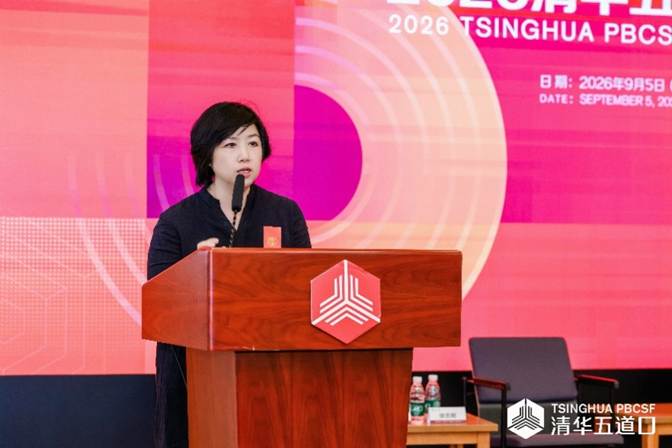
Photo: Li Jingfang moderates the event
Li Jingfang extended her sincere greetings to the faculty members, alumni, and family members returning to campus and thanked them for their continued commitment to the School’s development. She explained that this year’s reunion adopted a roundtable format to encourage greater interaction among alumni, create more opportunities for graduates from different cohorts to exchange views and learn from one another, and carry forward the School’s tradition of mentorship, mutual support, and shared growth. Representatives of the Class of 2026 were also invited to participate. Bringing together alumni across four decades, the event celebrated both enduring relationships and the passing on of the School’s spirit to a new generation.
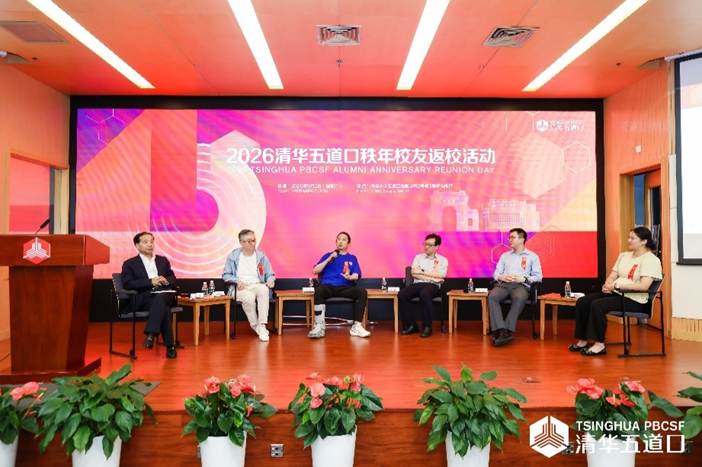
Photo: The roundtable discussion
Professor Zong Liang, a member of the 1996 doctoral cohort, Senior Research Fellow at the World Finance Forum, and former Chief Research Fellow of Bank of China, moderated the roundtable discussion. The panelists were Xu Zhigang, a member of the 1986 master’s cohort and former partner at Deloitte; Chen Peng, a member of the 1996 master’s cohort and Chairman of Beijing Xigu Private Fund Management Co., Ltd.; Ming Ming, a member of the 2006 master’s cohort and Chief Economist at CITIC Securities; Lu Bing, a member of the 2016 doctoral cohort, Associate Professor in the Department of Financial Statistics at the School of Statistics, Beijing Normal University, and doctoral advisor; and Zhang Xinyu, a member of the 2016 master’s cohort, Senior Vice President and Board Secretary (who led the company’s IPO) at Beijing Onmicro Electronics Co., Ltd.
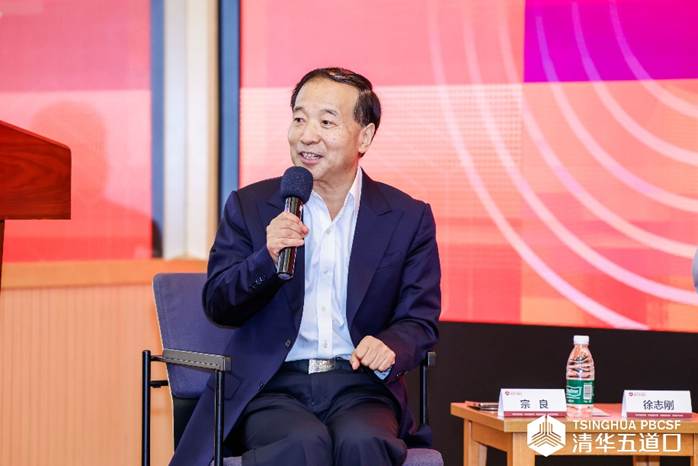
Photo: Zong Liang moderates the roundtable discussion
Opening the discussion, Zong observed that although the alumni were at different stages of their lives and worked across diverse professional fields, their shared educational experiences and the traditions of the School continued to connect them closely. Spanning memories of campus life and the frontiers of economics and finance, the discussion highlighted the lasting influence of the School’s education on alumni career choices and professional judgment. It also demonstrated how the School’s alumni maintain a rational perspective amid changing times and respond to real-world challenges with a strong sense of responsibility. Zong noted that the value of alumni reunions and intergenerational exchange lies in drawing inspiration from past experience and bringing insights from different fields into dialogue.
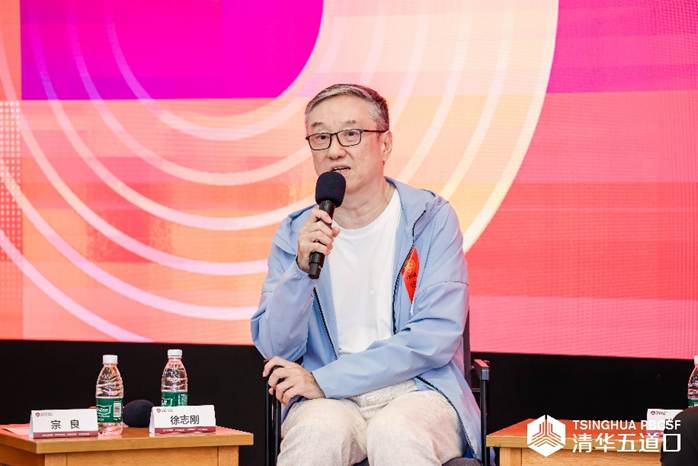
Photo: Xu Zhigang participates in the roundtable discussion
Xu reflected on his student days at the School, noting that the rigorous professional training provided by his professors had continued to benefit him throughout his career. It had also given him the expertise and confidence to navigate challenges in international financial markets. Turning to the international expansion of Chinese enterprises, Xu observed that overseas expansion had evolved from the early stages of attracting foreign capital and pursuing cross-border mergers and acquisitions to a new phase characterized by establishing overseas manufacturing facilities and managing global operations. The challenges had consequently expanded to include geopolitics, trade protectionism, supply chain management, cross-cultural governance, and data regulation. He emphasized that professional service providers must understand both the decision-making processes of Chinese enterprises and the regulatory frameworks of their host countries, while strengthening their ability to coordinate services across domestic and international markets. Service models should also move beyond short-term, project-specific engagements toward continuous support throughout the entire investment life cycle, with greater attention to post-investment management, intellectual property, human resources, supply chains, and financial and tax management.
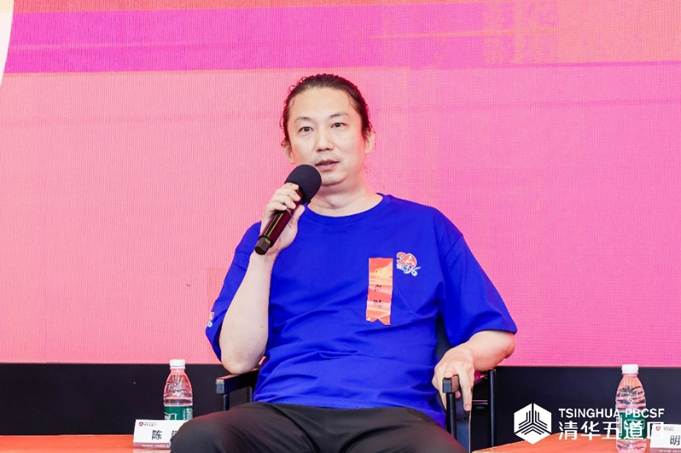
Photo: Chen Peng participates in the roundtable discussion
Chen recalled that during his studies at the School, experts and scholars with direct experience in policymaking and financial practice introduced him to cutting-edge perspectives that later helped him understand markets, institutions, and regulatory issues. Amid rapid changes in the economic and financial environment, he noted that the professional training and strong alumni network he had gained at his alma mater continued to provide an important anchor. Discussing the development of China’s capital markets, Chen observed that the large number of market participants and the complexity of market dynamics made it difficult to forecast market movements based solely on short-term behavior. A more reliable approach, he argued, was to identify underlying factors within the broader framework of economic and financial activity. Drawing on changes in global supply chains, domestic demand, and the monetary policy environment, he argued that a fundamental driver of the profound transformations underway in the global economy was the shift in control over supply chains. Greater influence over global supply chains, he suggested, could help sustain a relatively stable low-interest-rate environment and provide a more stable basis for asset valuations. Looking ahead, as the renminbi gradually becomes an important source of global liquidity, high-quality Chinese manufacturing companies and competitively advantaged assets may receive greater recognition of their underlying value. He expressed confidence in the long-term development of China’s capital markets.
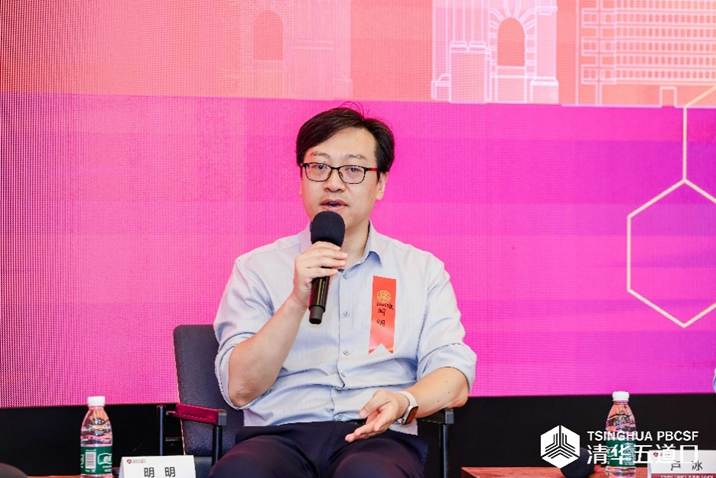
Photo: Ming Ming participates in the roundtable discussion
Ming summed up his experience at the reunion in two words: “reminiscence” and “continuity.” He noted that the guidance and support he had received from senior alumni when making career choices had given him a deep appreciation of the School’s tradition of mutual support and shared success. Discussing the “K-shaped divergence” in the economy, Ming explained that the phenomenon extended beyond the divergence between the technology sector and traditional cyclical industries. It was also evident in the differences between old and new economic sectors, supply and demand, domestic and external demand, and profit growth across industries. These trends reflected the combined effects of technological innovation, changes in the global economic landscape, China’s domestic economic restructuring, and economic cycles. He argued that excessive divergence made it difficult to establish a virtuous cycle of economic development and that the trend could gradually narrow in the future. At the macroeconomic level, structural policies and measures to improve the circulation of the domestic economy could help address these imbalances. Individuals and investors, meanwhile, should maintain a rational perspective amid market volatility and diverging investment styles.
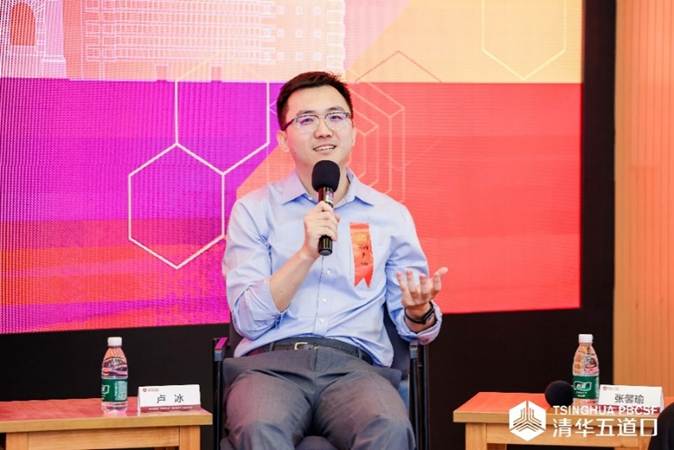
Photo: Lu Bing participates in the roundtable discussion
Lu noted that the strong sense of humanistic care and tradition of solidarity and mutual assistance at the School had not only made campus life a warm and memorable experience but had also profoundly influenced his subsequent academic career. Having progressed from student to doctoral advisor, he said he had gained a deeper appreciation of the School’s high standards for academic integrity and rigorous scholarship. Discussing the application of big data and artificial intelligence, Lu explained that large language models and related technologies had expanded the scope of data available for research by enabling unstructured information, including text, images, and video, to be extracted, quantified, and analyzed. This development was helping economic and financial research move beyond its traditional reliance on structured databases. Artificial intelligence was also becoming an important subject of study in fields such as international trade and economic growth, potentially challenging conventional economic models. At the same time, Lu cautioned that large language models remained susceptible to problems such as hallucinations, and users should not abandon independent judgment. As artificial intelligence increasingly takes over routine tasks, the ability to frame meaningful questions, identify promising research directions, and exercise sound judgment in selecting research topics will become even more important—not only for researchers but also for professionals across industries.
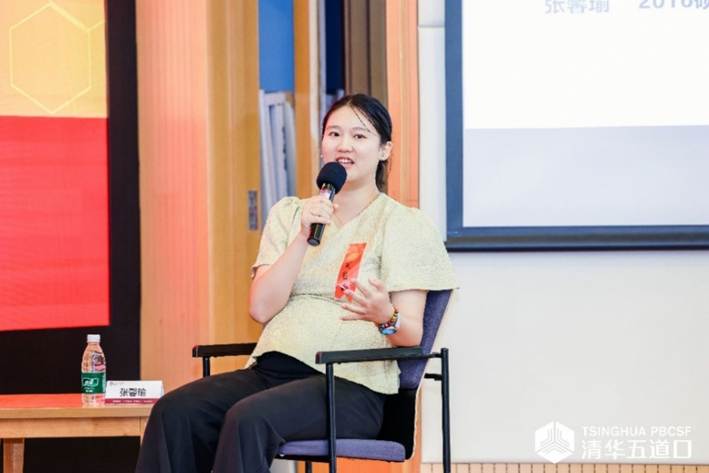
Photo: Zhang Xinyu participates in the roundtable discussion
Zhang recalled working with classmates on course projects, participating in overseas exchange programs, and training and competing with the Tsinghua women’s basketball team. These experiences at the School, she said, had taught her the importance of embracing new challenges, working collaboratively, and persevering over the long term. Discussing demand for financial talent, Zhang observed that enterprises increasingly needed professionals with interdisciplinary capabilities spanning finance, industry, digital technology, and sound judgment, rather than specialists in finance alone. As artificial intelligence gradually assumes routine tasks such as data analysis and report writing, the ability to ask the right questions, assess the reliability of answers, and bridge business and technology is becoming increasingly important. As finance becomes more deeply integrated with the real economy, professionals must also understand the technological barriers, industry cycles, and business models of hard-tech companies. Zhang recommended that universities strengthen interdisciplinary and practice-oriented education by integrating programming, AI tools, and real-world industry cases into their curricula. She also suggested incorporating discussions of international rules and practical overseas experiences into training to better prepare students to participate in international market negotiations and the formulation of global rules.
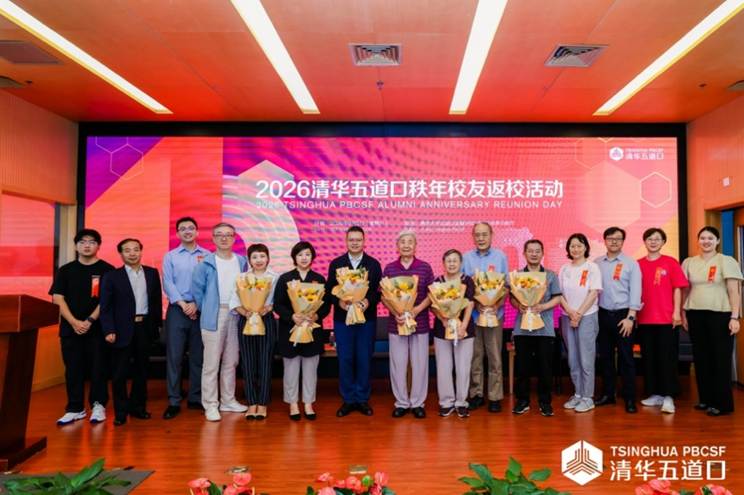
Photo: Alumni representatives express their gratitude to faculty members
Ahead of Teachers’ Day, representatives of the anniversary cohorts and the Class of 2026 presented flowers to their teachers as a heartfelt expression of gratitude for their dedicated guidance and years of teaching.
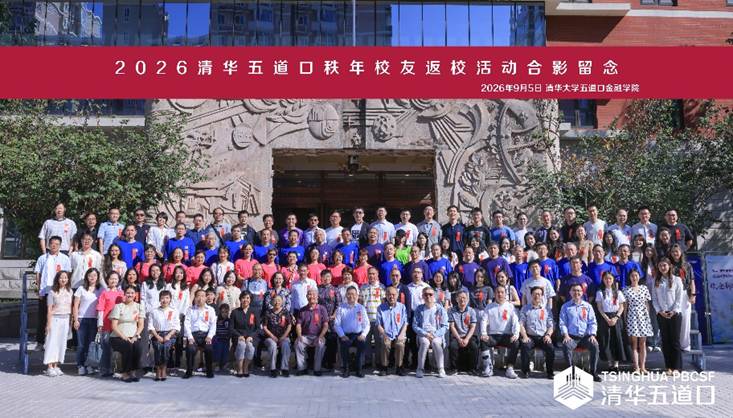
Photo: Group photo at the reunion
During the event, all participants gathered for a group photo in front of Building 1 on campus.
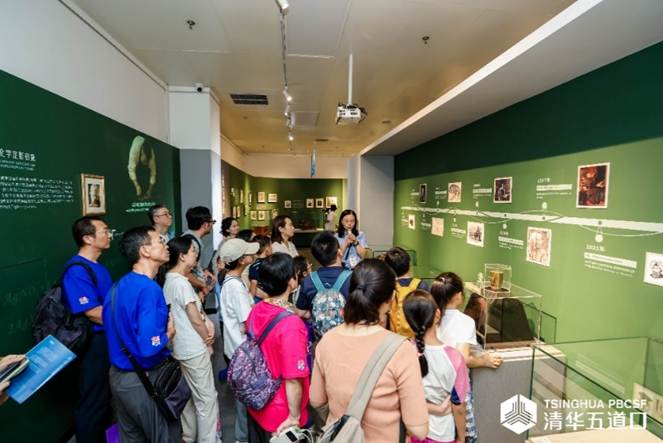
Photo: Alumni visit the Tsinghua University Science Museum
That afternoon, the Alumni Affairs Office organized a visit to the Tsinghua University Science Museum for a group of alumni. Through exhibitions of scientific artifacts and interactive displays, participants explored the history of technological development and major scientific discoveries, gaining a deeper appreciation of Tsinghua University’s rich scientific heritage and spirit of innovation.
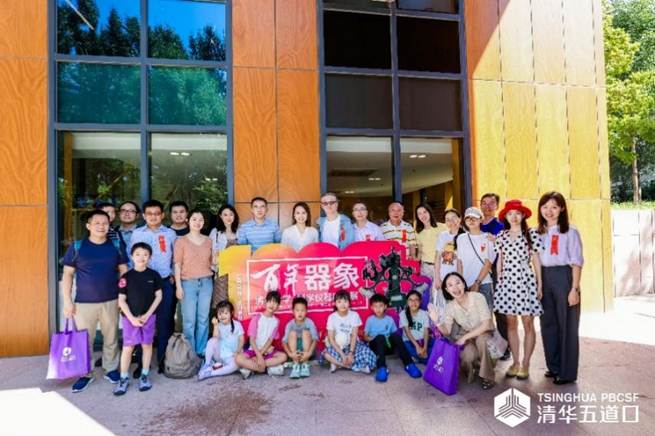
Photo: Group photo during the museum visit
The Alumni Anniversary Reunion Day is one of PBCSF’s signature alumni events. Since 2012, the School has welcomed alumni from 36 cohorts and more than 50 classes back to campus for reunions, including alumni from the cohorts of 1981 through 1989. This year’s event further strengthened ties among alumni, their alma mater, faculty members, and former classmates, highlighting the strong sense of community and enduring tradition of passing on the School’s spirit across generations. The Alumni Affairs Office will continue to improve its alumni services, diversify alumni engagement activities, and facilitate closer interaction between alumni and the School, bringing together greater collective strength to support alumni development and the continued growth of PBCSF.