Recently, the National Natural Science Foundation of China (NSFC) approved funding for a Key Program project titled “Stablecoin Shocks and Global Financial Stability: Dynamic Modeling and Risk Assessment,” led by Professor Li Kai, Chair Professor of Finance at the PBC School of Finance, Tsinghua University (PBCSF). Against the backdrop of the rapid development of digital finance, the project examines emerging challenges posed by stablecoins to the global financial system, cross-border capital flows, and national financial security. It will conduct systematic research in four areas: safe asset pricing, financial intermediation, international monetary competition, and financial regulation.
As the global financial system undergoes rapid transformation, digital technologies are reshaping the way monetary and financial systems operate. Stablecoins are no longer confined to trading and payments within crypto-asset markets. They are increasingly becoming an important link connecting on-chain financial activities, U.S. dollar-denominated safe-asset markets, global dollar liquidity, and cross-border payment networks. Their rapid expansion may affect financial market stability and transmit risks to other economies through cross-border networks. Identifying, assessing, and managing these risks has become a major macro-financial challenge in the digital finance era.
The project builds on Professor Li’s recent research in macro-finance and digital currencies. He is currently leading research on stablecoin risk governance, digital currencies, and China’s financial intermediation system under an emergency management project administered by the Department of Management Sciences of the NSFC. Building on this earlier work, the newly funded Key Program expands the scope of inquiry to include stablecoin shocks, safe asset pricing, cross-border risk transmission, and international monetary competition. It also seeks to distill fundamental scientific questions of broader significance from China’s practical challenges, developing a more systematic framework for macro-financial research on stablecoins.
The project aims to address three interconnected scientific questions: how stablecoin risks emerge and amplify; how these risks are transmitted to the real economy and generate financial risks for China through external channels; and how such risks can be identified, assessed, and managed.
The theoretical component will examine how stablecoins affect safe-asset markets, including the U.S. Treasury market. It will characterize the self-reinforcing cycle of redemptions, fire sales, price discounts, and further redemptions during periods of financial stress, and analyze how related shocks are transmitted to the real economy through financial intermediaries. The empirical component will integrate high-frequency on-chain data with conventional financial data to identify cross-border risk transmission associated with stablecoins and develop a global stablecoin risk assessment framework. Taking into account the regulatory frameworks of mainland China, the digital renminbi, and Hong Kong’s stablecoin regime, the research will also investigate potential channels through which shocks originating from offshore stablecoins could be transmitted to China’s financial system. On the institutional governance front, the project will compare regulatory approaches and assess the optimal trade-offs among financial stability, market efficiency, and monetary sovereignty, providing quantitative insights to support China’s participation in global stablecoin governance and its efforts to safeguard national financial security.
Led by PBCSF, the project brings together Professor Zhang Xiaoyan, Professor Wang Zhengwei, and Associate Professor Liu Bibo from the School, alongside scholars from Peking University Shenzhen Graduate School, Fudan University, the University of Macau, Hong Kong Baptist University, and other institutions. The team combines expertise across institutions and disciplines.
The approval of this Key Program project aligns with PBCSF’s strategic development, including the establishment of the Research Center for Financial Strategy and Policy and the Institute for Fintech Research as well as spearheading the Tsinghua University FinTech Lab. The project will foster interdisciplinary integration across macro-finance, financial policy, and financial technology, further strengthening the School’s capacity to investigate digital finance and financial security from a macro-financial perspective. Its findings are expected to support China’s efforts to enhance its capacity to identify and manage emerging financial risks and advance the development of China into a leading financial power.
In addition, three postdoctoral researchers at PBCSF—Bei Zeyun, Chen Ying, and Ren Zhaoyue—have received funding under the NSFC Young Scientists Fund (Category C) for their respective projects: “The Impact Mechanism of Global Supply Chain Restructuring Driven by Geopolitical Risks on Financial Market Stability,” “Networks and Public Goods Provision,” and “Drivers and Economic Consequences of Venture Capital Repurchase Clauses from the Perspective of Patient Capital Development.” Their research addresses frontier issues including the transmission of financial risks through global supply chains, the efficiency of public goods provision in social networks, and the relationship between repurchase clauses and corporate innovation performance. Through their solid academic foundations and keen awareness of important research questions, the three scholars have developed distinctive research agendas in their respective fields, demonstrating the potential of PBCSF’s early-career researchers to address major practical challenges and contribute to national strategic priorities.
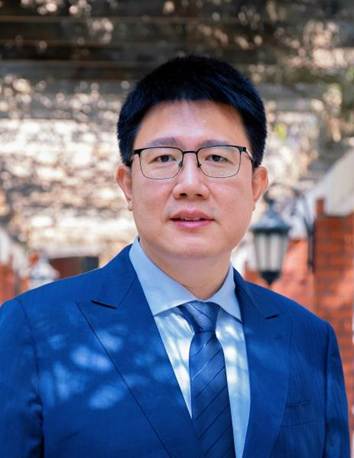
Li Kai is a Chair Professor of Finance at the PBC School of Finance, Tsinghua University. He is a recipient of the National Natural Science Foundation of China (NSFC) Young Scientists Fund (Category A, formerly the NSFC Distinguished Young Scholars) and the inaugural National Finance Distinguished Scholar Award. His research spans macro finance, asset pricing, green finance, and the Chinese financial market. His research centers on a macro-finance theoretical framework that captures the feedback mechanisms between the macroeconomy and financial markets. In particular, he has established a systematic research program in leasing finance, uncovering the critical role of leasing markets in risk sharing, capital allocation efficiency, and macroeconomic stability. His work has been published in leading journals, including the Journal of Finance, Review of Financial Studies, Journal of Financial Economics, and Journal of Monetary Economics, among others. His research on green finance has been recognized as a highly cited paper in the Journal of Finance and has received the Western Finance Association (WFA) Best Paper Award in Empirical Finance and the Amundi-ESSEC ESG Prize, among other honors. He currently serves as an Associate Editor for China Economic Quarterly (Chinese), Journal of Banking and Finance, Review of Asset Pricing Studies, Economics Letters, and other journals.