The Society for Financial Studies (SFS) Cavalcade Asia-Pacific 2025 concluded successfully in Beijing from December 5–7, 2025. Hosted by Tsinghua University PBC School of Finance (Tsinghua PBCSF), the conference convened leading scholars worldwide to present breakthrough research and exchange insights on the frontiers of finance.
The SFS Cavalcade stands among the top three global finance academic conferences. Jointly organized by three premier SFS journals—Review of Financial Studies, Review of Corporate Finance Studies, and Review of Asset Pricing Studies—it serves as a flagship platform for international scholarly exchange. Tsinghua PBCSF, a powerhouse in financial education and policy research, previously hosted the inaugural Asia-Pacific Conference in 2017. Its return as host underscores the School’s sustained leadership in fostering academic collaboration across the region and beyond.
Professor Lin Chen, Vice-President and Pro-Vice-Chancellor (Business), Stelux Professor in Finance, and Chair of Finance at the HKU Business School, served as the Conference Chair. Professor Jun Qian, Professor of Finance and Executive Dean at the International School of Finance (FISF) at Fudan University, served as the Conference Vice Chair. Professor Xiaoyun Yu, Chair Professor of Finance and Deputy Dean at Shanghai Advanced Institute of Finance (SAIF) at Shanghai Jiao Tong University, served as the Conference Associate Chair. Professor Xiaoyan Zhang, Associate Dean and Chair Professor of Finance at Tsinghua PBCSF, served as the Head of the Host Institution.
The conference opened with remarks from Professor Xiaoyan Zhang, Associate Dean and Chair Professor of Finance at Tsinghua PBCSF. Professor Zhang welcomed attendees and highlighted the Cavalcade’s vital role in advancing financial scholarship across the Asia-Pacific. Expressing pride in hosting the event for the second time, she credited the dynamic discussions in afternoon sessions on “The Value of Skills,” “Banking,” “Household Finance,” and “Networks” for setting an energetic tone for the days ahead.
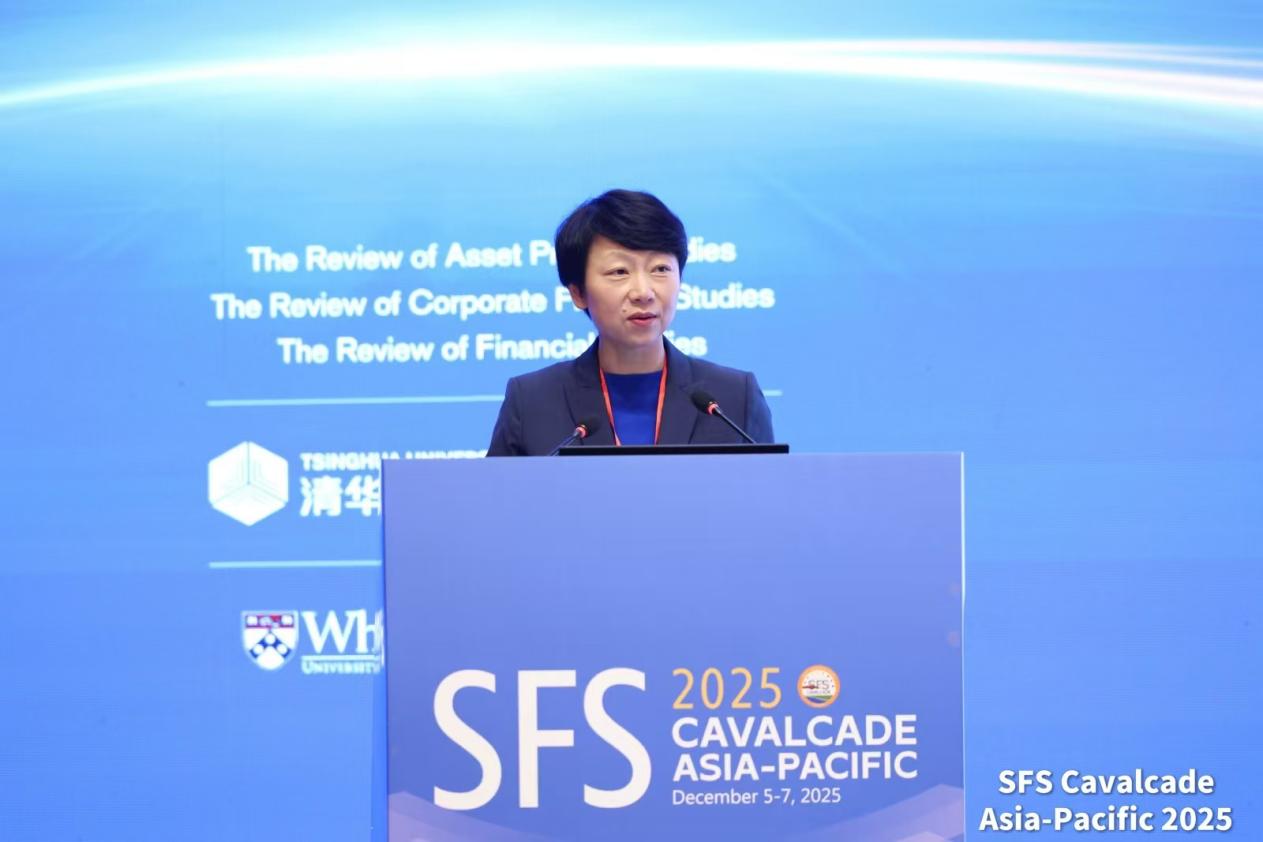
Photo: Professor Xiaoyan Zhang delivering the opening speech
This year’s conference featured 54 high-caliber papers spanning fixed income, banking, household finance, network economics, crypto and fintech, ESG, labor market disruptions, return patterns, and government policy finance. The presentations reflected cutting-edge trends and diverse research directions shaping the Asia-Pacific and global financial landscape. Over 200 distinguished scholars from institutions such as Stanford, the University of Chicago, the University of Pennsylvania, the National University of Singapore, and Tsinghua engaged in robust discussions on pressing issues.
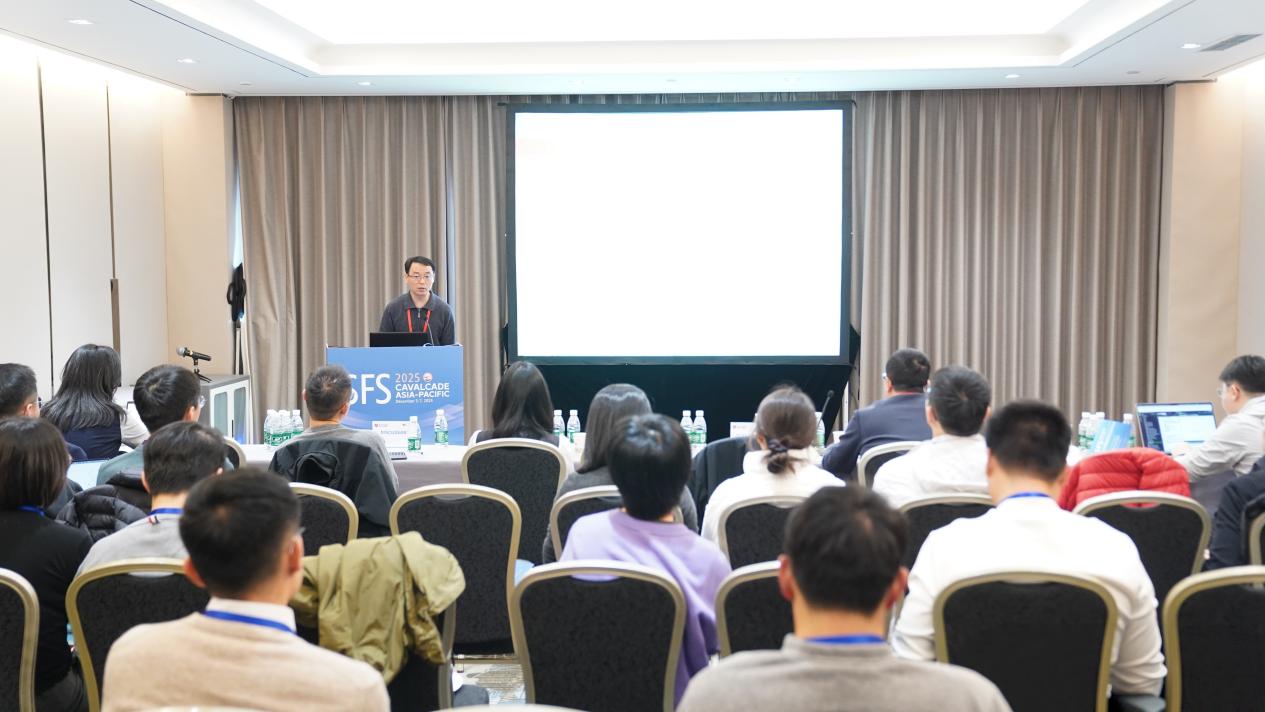
Photo: A session in progress
Professor Chen Lin, Stelux Professor of Finance and Chair of Finance at HKU Business School, delivered a keynote on “Biodiversity Impacts of Renewable Energy.” Using satellite imagery and the Species Threat Abatement and Restoration (STAR) metric, he presented a global assessment of how renewable energy projects affect biodiversity. Analysis of 40,911 utility-scale plants revealed heterogeneous impacts across solar, hydro, and wind facilities, shaped by ownership structures and financing models. Professor Lin addressed whether emission reductions inherently conflict with biodiversity protection, offering project screening as a pathway to align both goals and inform ESG investment decisions.
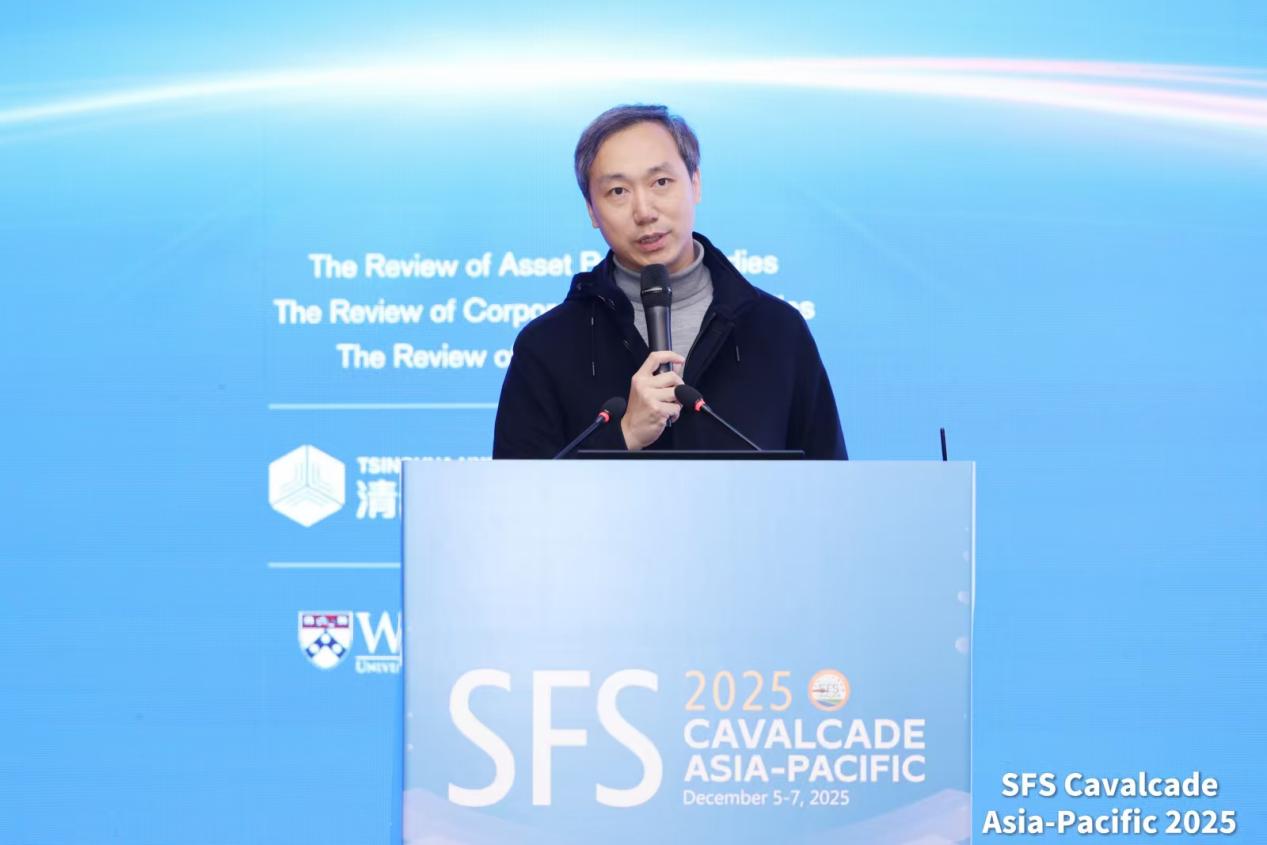
Photo: Professor Chen Lin delivering the keynote speech
Professor Dacheng Xiu, Joseph Sondheimer Professor of Econometrics and Statistics at the University of Chicago Booth School of Business and NBER Research Associate, examined “Machine Learning in Asset Pricing: Myths, Missteps, Criticisms, and Real Limits.” While machine learning shows promise in predicting returns and harnessing alternative data, Professor Xiu argued that controversies stem not from the technology itself but from misaligned objectives and weak economic interpretation. He urged academia and industry to bridge the “prediction culture” and “structural culture” for more meaningful applications.
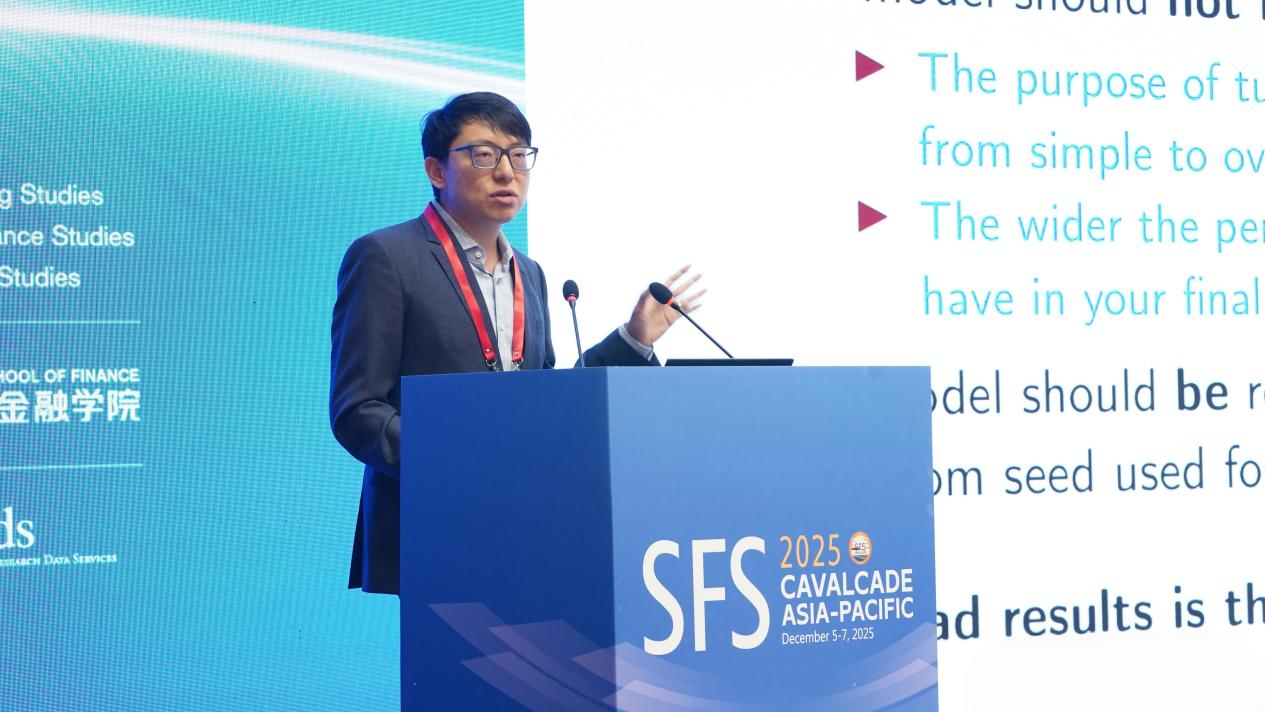
Photo: Professor Dacheng Xiu delivering the keynote speech
The conference recognized three outstanding papers with awards sponsored by the Wharton School’s WRDS database:
The Arthur Warga Award for Best Paper in Fixed Income was awarded to "Anatomy of the Treasury Market: Who Moves Yields?" by Manav Chaudhary, Zhiyu Fu, and Haonan Zhou. The paper models how heterogeneous investor demand shocks shape U.S. Treasury yields, showing that foreign investors’ influence has waned post-crisis while the Fed acts as a contingent liquidity provider.
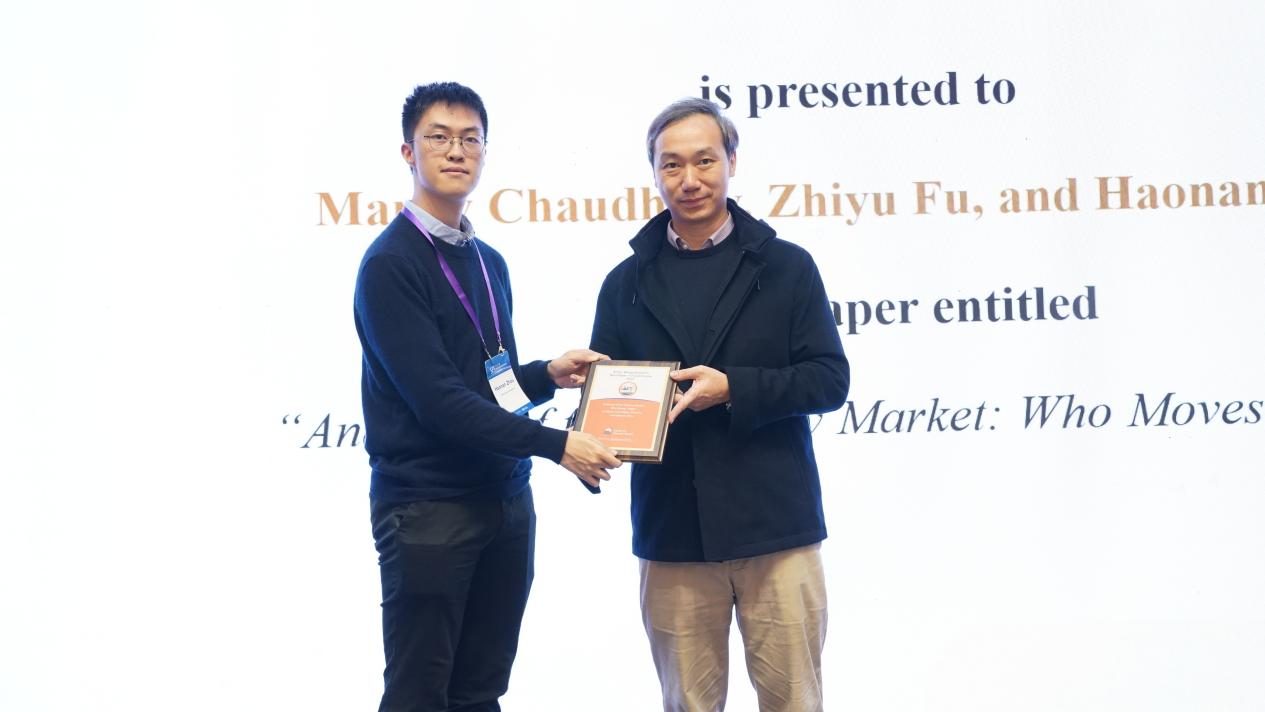
Photo: Professor Chen Lin presenting the Arthur Warga Award for Best Paper in Fixed Income
The Best Paper in Corporate Finance award was awarded to "Code-Washing: Evidence from Open-Source Blockchain Startups" by Ofir Gefen, Daniel Rabetti, Yannan Sun, and Che Zhang. The study exposes how blockchain startups manipulate GitHub activity to mimic development during fundraising, revealing that genuine “code-producers” outperform “code-washers” over the long term.
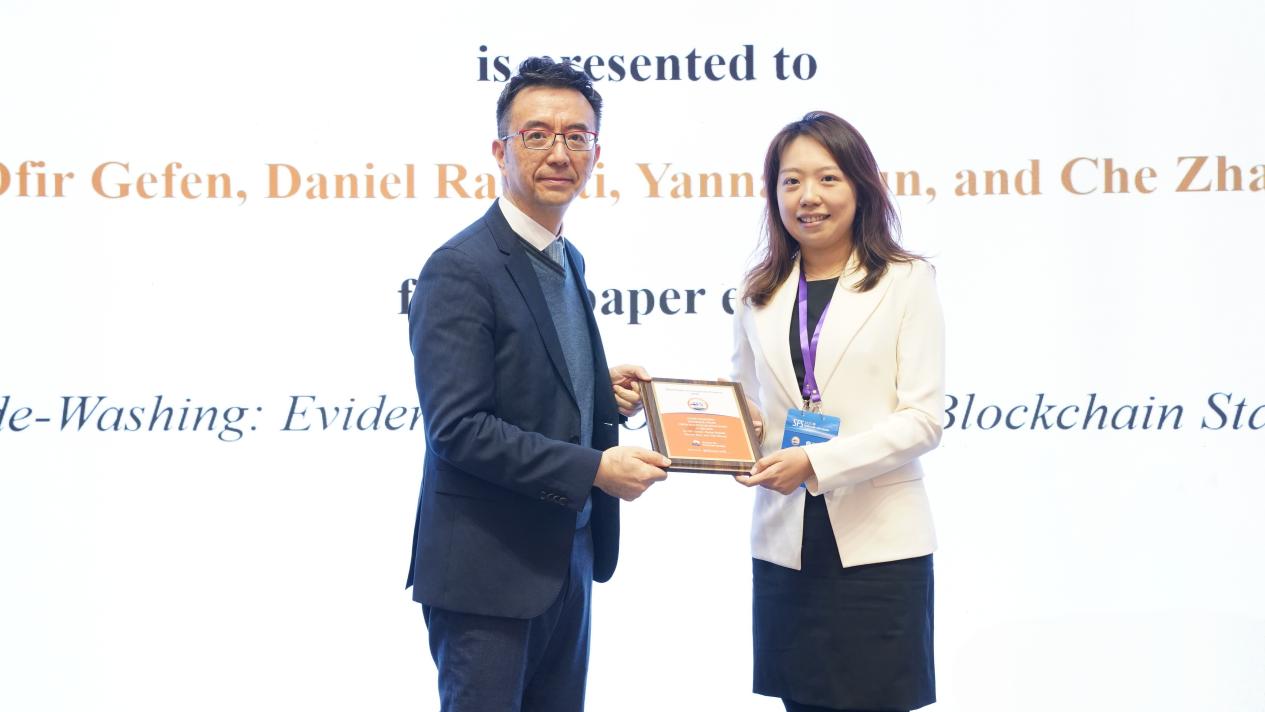
Photo: Professor Jun Qian presenting the Best Paper in Corporate Finance
The Best Paper in Asset Pricing award was awarded to "Rethinking Exchange Rate Exposure in Equity Markets Through International Trade Networks" by Seo Ha Kim and Sungjune Pyun. The paper demonstrates that trade networks critically moderate how currency fluctuations affect firm values, with effects amplifying through export and import linkages.
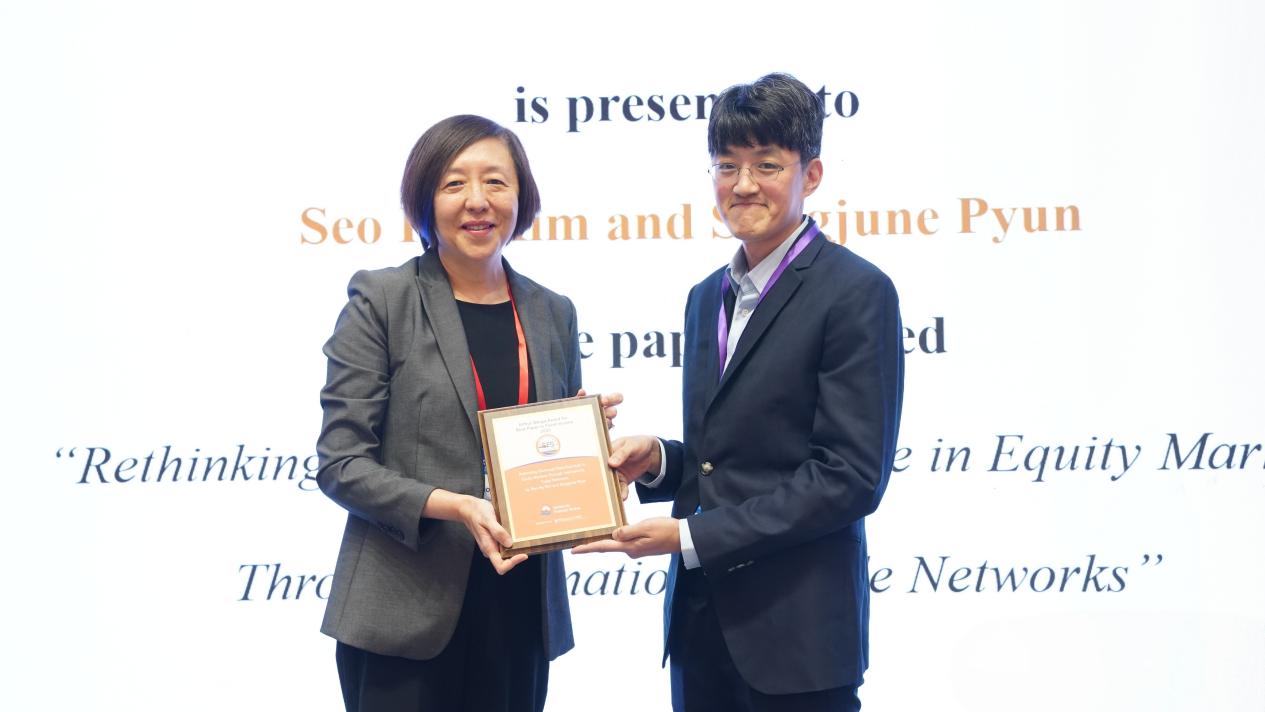
Photo: Professor Xiaoyun Yu presenting the Best Paper in Asset Pricing
As global finance undergoes profound transformation, Tsinghua PBCSF remains committed to supporting premier platforms like the SFS Cavalcade Asia-Pacific. By convening top scholars to tackle frontier questions and translating research into real-world impact, the School continues to shape financial theory and practice while fostering cross-disciplinary and cross-regional collaboration.