In the spring of 2026, the global capital markets are experiencing one of their darkest moments—amid the spillover effects of geopolitical conflicts in the Middle East, energy prices are fluctuating sharply, inflation expectations are rising, and coupled with the potential sharp turn in global monetary policy, risk appetite is shrinking sharply. Faced with escalating external uncertainties, China’s capital market is demonstrating its consistent resilience while also undergoing a deeper long-term transformation.
How to build a “breakwater” amid turmoil? On March 27, during the Boao Forum for Asia Annual Conference 2026, a sub-forum themed “Fostering a Sound Market Environment and Advocating Long-Term Value Investment” brought together representatives from government, business, and academia. Instead of shying away from the immediate challenges, they focused on deeper institutional restructuring. The core consensus among the participants was that only by establishing a bottom line through a rules-based legal framework and promoting mergers and acquisitions to activate competition can China’s capital market truly become a safe haven for global “patient capital.”
The sub-forum was co-organized by Tsinghua University PBC School of Finance (Tsinghua PBCSF), and moderated by Zhang Xiaoyan, Associate Dean and Chair Professor of Finance at Tsinghua PBCSF. Attendees included Wu Xiaoqiu, Dean of the National Academy of Financial Research, Renmin University of China; Jin Zhuo, Vice Chairperson of the National Council for Social Security Fund; Kenneth Schindler, President of Goldman Sachs Asia Pacific (ex-Japan); Hu Zuliu, Founder, Chairman, and CEO of Primavera Capital Group; Cheng Hehong, Chief Lawyer of the China Securities Regulatory Commission; Guan Tao, Global Chief Economist of BOC International; Clara Chan, CEO of Hong Kong Investment Corporation Limited; Bryan Pascoe, CEO of the International Capital Market Association; Tian Xuan, Boya Distinguished Professor at Peking University; and Shen Jian’guang, Vice President of JD Group and Chief Economist. They also delivered speeches in succession.
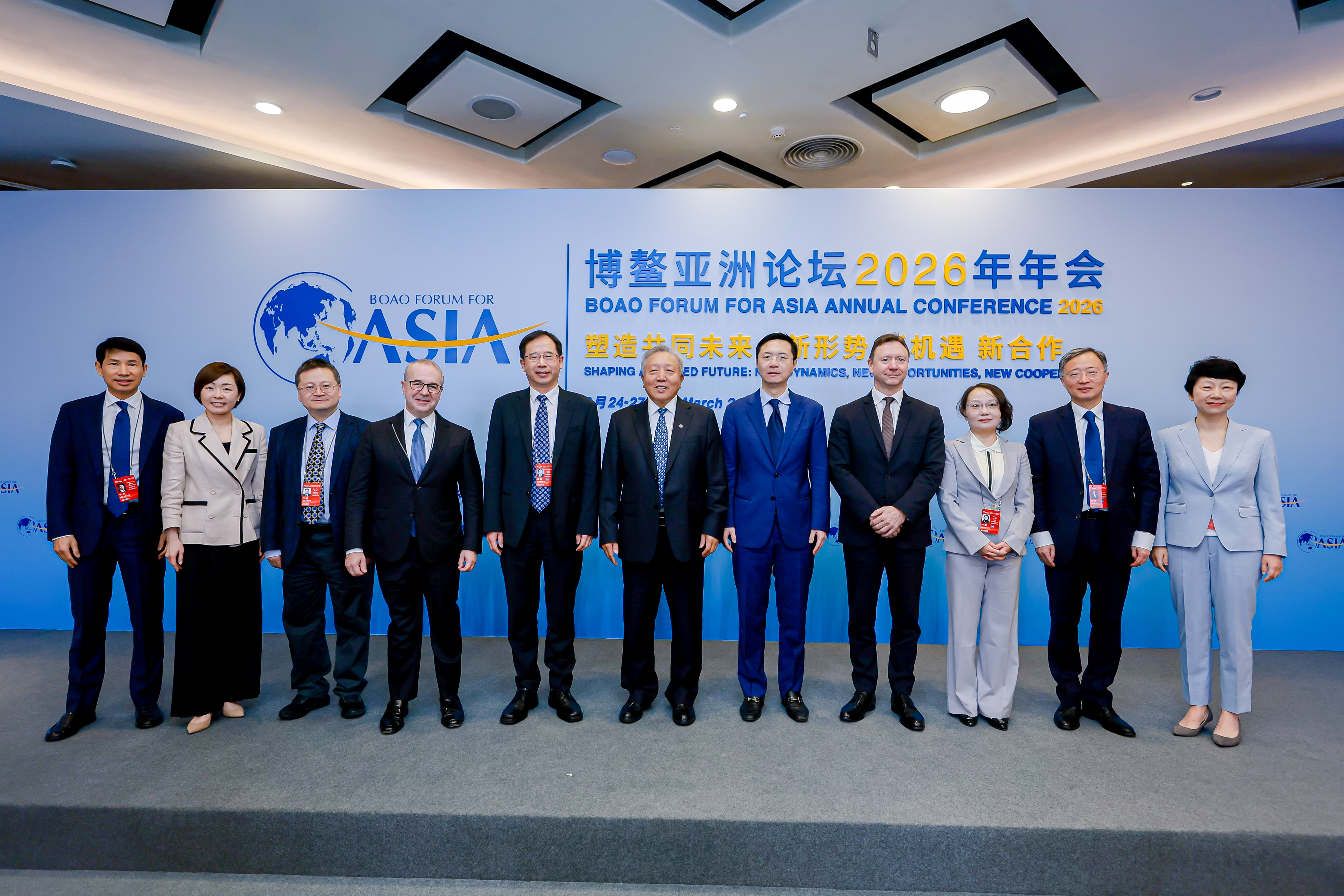
Photo: Group photo of forum participants
The Rule of Law as the Foundation of Market Confidence
“The growth momentum and trend of the Chinese market have not changed.” Wu Xiaoqiu set the tone for the discussion right from the start—although global markets are volatile, this volatility stems from external uncertainties, and the market’s endogenous momentum remains unshaken.
The resilience demonstrated by China’s capital market is closely related to a series of effective reform measures. Wu Xiaoqiu noted that there are three main aspects to recent reforms aimed at maintaining an upward market trend: on the asset side, making sci-tech enterprises the main market players; on the demand side, introducing long-term funds such as social security and insurance funds; and on the institutional side, focusing on improving the rule of law.
Wu Xiaoqiu emphasized that the rule of law is the primary productivity. "With a sound rule of law, people have expectations. Market entities, investors, and consumers all have confidence."
“In the past, the cost of violations was too low. Now, a structural shift is taking place, transitioning from administrative penalties to criminal penalties and civil compensation,” Wu said. He added that the core of the three aforementioned reforms is first, to ensure there are no “landmines” in China’s market in the future, guaranteeing market transparency; second, to ensure the market is an “investment market”; and third, to make China’s market an international financial center by 2035.
Cheng Hehong focused on the China Securities Regulatory Commission’s (CSRC) relevant initiatives over the past two years and outlined seven key future directions. He mentioned that since the introduction of the new “Nine-Point Guideline” in 2024, the CSRC has formulated and revised over 50 normative documents covering key areas such as listed company restructuring, information disclosure, delisting systems, shareholder stake reductions, promoting the entry of long-term funds into the market, and improving the quality of listed companies.
Simultaneously, the CSRC and relevant authorities have continuously intensified efforts to punish violations. Cheng Hehong stated that last year, the CSRC investigated and handled 701 cases, imposing fines and confiscations totaling 15.474 billion yuan. Citing the recently released draft financial law for public comment, he indicated that the legal foundation supporting long-term investment, value investment, and rational investment in China’s capital market has been further strengthened.
Cheng Hehong used a set of figures to demonstrate the significant outcomes of these measures: In 2025, various long-term funds significantly increased their market entry, with social security funds, insurance funds, annuity funds, public funds, and proprietary trading of securities firms collectively making net purchases of A-shares exceeding 800 billion yuan. Including related funds purchasing equity funds, central state-owned enterprise listed companies conducting buybacks and increasing holdings, the actual new entry scale of long-term funds exceeded 1 trillion yuan. Among profitable listed companies meeting the dividend distribution conditions, 97% paid dividends, with total dividends reaching a record high of 2.55 trillion yuan.
As a representative of domestic financial institutions, Guan Tao offered profound insights from the perspectives of investor education and investor confidence and satisfaction. He pointed out that according to relevant surveys, there is still room to improve the investment experience of individual investors. Investors need to enhance their self-education on financial knowledge, intermediaries need to strengthen their suitability obligations to investors, and regulatory authorities need to intensify investor protection.
Tian Xuan further proposed four key directions for strengthening investor protection: first, impose severe enough penalties to serve as a real deterrent; second, further leverage the role of China’s version of class action, the special representative litigation system; third, improve the coordination between administrative and criminal penalties, bridging the Securities Law and the Criminal Law; fourth, strengthen the protection of entrepreneurs and improve the bankruptcy law.
Tian Xuan argued that although the new Securities Law has increased the cost of violations such as insider trading and market manipulation, the severity is still insufficient. From a criminal perspective, he noted, “Defrauding 5,000 yuan leads to imprisonment, but financial fraud of 50 million yuan does not. This is very unfair.”
Anchored by Patience: The Evolution of Capital from Short-Term Speculation to Long-Term Commitment
The capital market is a crucial hub for integrating technological innovation with industrial innovation. The “15th Five-Year Plan” proposes to expand patient capital and improve the policy system supporting the entry of medium and long-term funds into the market.
What constitutes patient capital? Jin Zhuo provided the most compelling evidence through the National Council for Social Security Fund’s (NCSSF) two-decade-long practice.
“Some of the direct equity investment projects participated in by the NCSSF have been held for nearly twenty years. This duration proves that we are true practitioners of long-term investment,” Jin Zhuo said. She explained that thanks to the forward-looking nature of relevant regulations, the NCSSF has built a globalized, diversified, and decentralized investment portfolio, providing ample confidence to withstand market fluctuations.
She further explained that in the primary market, the NCSSF invests in long-cycle equity projects covering finance, infrastructure, strategic emerging industries, technological innovation, and more. Last year, the NCSSF established sci-tech innovation funds in Jiangsu, Zhejiang, Fujian, Sichuan, and Hubei provinces, with a total scale of 160 billion yuan and investment periods extending up to 18 years, far exceeding the typical 7–10 year duration of market-oriented equity funds.
In the secondary market, the NCSSF has repeatedly increased its positions decisively during significant A-share declines, playing a role in stabilizing investor confidence. Jin Zhuo shared a set of comparative data: Over the past five years, the average annual turnover rate of public equity funds was approximately 370%, with an average holding period of 3.25 months; during the same period, the turnover rate of actively managed equity portfolios entrusted by the NCSSF was below 100%, with an average holding period exceeding 12 months. Since its establishment over twenty years ago, the NCSSF has achieved an average annual investment return of 7.39%, with cumulative investment returns exceeding 50% of its current fund size.
However, as Clara Chan noted, the uncertain times pose a challenge to patient capital, “because it is not easy to stay true to our original intentions in such turbulent times.” She shared the unique experience of Hong Kong Investment Corporation Limited (HKIC), a wholly government-owned investment institution—proactive deployment and active engagement.
Chan stated that over 70% of HKIC’s investments are in early-stage or growth-stage enterprises. More than 50% of its investment portfolio is allocated to Mainland China projects and going-global projects, with 30% in Hong Kong local projects and 20% in overseas projects. “HKIC was established at the end of 2022 and began full operation in 2024. By the end of that year, we had achieved positive investment returns, and this year our investment return rate is in double digits.”
HKIC is also committed to playing a greater role in stabilizing the market and attracting investment. Chan said, “Last year, we announced the multiplier effect. For every one yuan we invested, we attracted 4 yuan in external investment, a ratio of 1:4. Now, one yuan attracts over eight yuan, much of it from overseas capital.”
M&A as a Tool: From Excessive Competition to Ecosystem Reshaping for Value Creation
Hu Zuliu shifted the focus to mergers and acquisitions (M&A), an area often overlooked in the Chinese market. He believes that as the world’s second-largest capital market, China still has significant room for growth in the M&A sector.
Why are M&A so important? Hu offered a profound analysis: An active M&A market can promote industry consolidation, addressing the current economic issues of excessive competition and overcapacity, while also placing continuous pressure on listed companies. “If a listed company faces the risk of control changes, it must operate prudently and focus more on creating value for shareholders,” he said.
Hu further analyzed multiple reasons for the relative inactivity of China’s M&A market, including the high proportion of state-owned enterprises among listed companies, limited M&A financing channels, and regulatory pressures. He thus called on regulatory authorities to gather market feedback and optimize the M&A system.
Wu Xiaoqiu strongly agreed. He pointed out that the most important aspect of M&A is the formation of a market for corporate control. Using the classic “Vanke-Baoneng dispute” as an example, he analyzed, “Although the source of funds was controversial, the market itself needs M&A.” He suggested that the market should not only facilitate capital entry but also establish incentive mechanisms, pressure mechanisms, and delisting mechanisms at the regulatory level, allowing the market to gradually mature.
Jin Zhuo also noted that a significant factor currently affecting the entry of long-term capital is the concern about exit strategies. She called for improving the multi-level market system to provide better equity transfer channels for innovative small and medium-sized enterprises, while also further refining the transfer mechanism for fund LP shares.
Tian Xuan analyzed another aspect of the “lack of patience” from the perspective of the venture capital market. He stated that over 80% of the domestic venture capital market is state-owned capital, but the official rotation system prevents officials from deeply cultivating a single area for long periods. Moreover, evaluation and assessment mechanisms cannot tolerate the venture capital law of “nine failures and one success out of ten projects.” He proposed two reform directions: first, lengthen the assessment cycle; second, implement portfolio-based evaluation. He also suggested encouraging corporate venture capital (CVC) at the institutional level, as such investments often pursue strategic synergy rather than purely financial returns.
Confidence as a Bridge: International Consensus from Short-Term Volatility to Long-Term Improvement
In the eyes of foreign investors, driven by supportive policies and endogenous momentum, the attractiveness and intrinsic value of China's capital market are accelerating.
In his speech, Kenneth Schindler fully affirmed the progress made in the Chinese market in improving asset quality, expanding the long-term “capital pool,” and optimizing the ecosystem. He also proposed several key areas requiring sustained attention: first, optimizing market mechanisms to fully consider the distinct financing needs of different industries, including AI, to better match the corporate financing lifecycle; second, enhancing investor willingness and convenience, especially for foreign investors, through policy transparency, consistency, and predictability; third, balancing cross-border data application with information security.
Bryan Pascoe, drawing on the International Capital Market Association’s (ICMA) experience in establishing industry-led standards and advocating on behalf of members to regulatory bodies, stated that industry associations play a significant role in sustainable and robust market development, a model China could consider. He particularly emphasized that establishing unified standards is crucial foundational work for medium and long-term capital entering the market, and that international cooperation, such as sharing data to strengthen risk identification and enhancing cross-jurisdictional coordination, is also very important.
Regarding how to increase the attractiveness of China’s capital market to international investors, Clara Chan, drawing on HKIC’s experience, mentioned that first, international investors need to be brought into China to understand it. Second, patient capital needs not only patience but also to be “active,” meaning focusing on post-investment resource empowerment rather than “passive holding.”
How do international investors currently view the Asian market? Bryan Pascoe provided an interesting comparison. “Eighty-five days ago, the answer was highly optimistic. But eighty-five days later, the picture is less rosy.” He noted that energy shocks, stock market pullbacks, and the abrupt end to the rate cut cycle have turned sentiment negative. However, he emphasized that during this process, more people are seeing what sets China apart—thanks to its layout in renewable energy, nuclear energy, and other fields, China is somewhat able to be “isolated” from the conflicts.
Pascoe specifically mentioned three factors making global investors more bullish on China: first, geopolitical relations, particularly Sino-US relations, may stabilize or even improve; second, the positive policy signals from China emphasizing domestic consumption stimulation; third, China’s world-leading position in fields like artificial intelligence.
So, where lie the “profit” opportunities in China’s capital market? “China currently has very favorable conditions to build a strong capital market,” said Shen Jian’guang. Citing China’s risk resistance and innovation capabilities in areas like energy and AI, he suggested that the capital market should, on one hand, better articulate China’s growth narrative and, on the other hand, fully leverage the booming digital economy to promote stock market development.
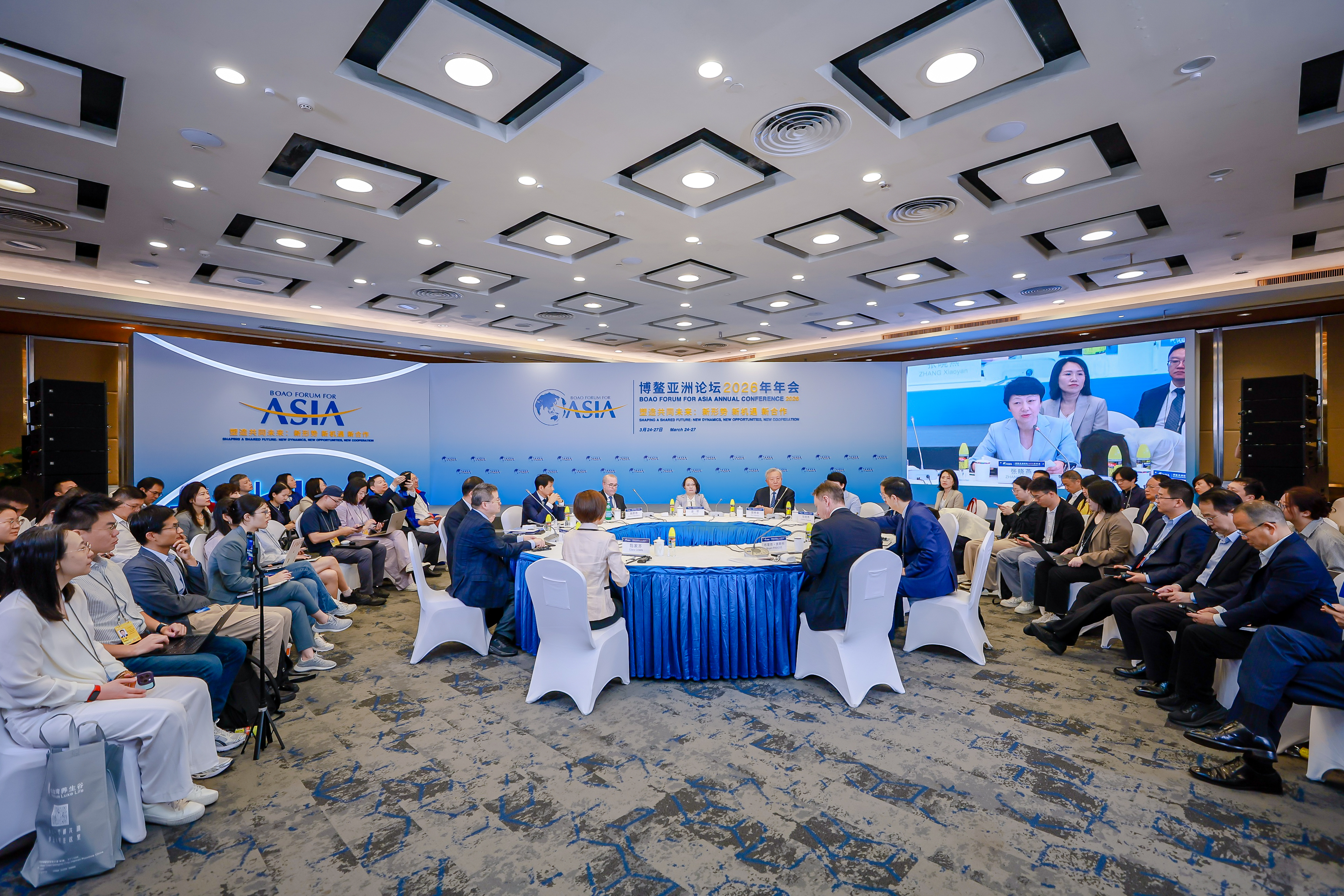
Photo: Forum scene